October 13, 2026 · 7 min read · By Exec Armor
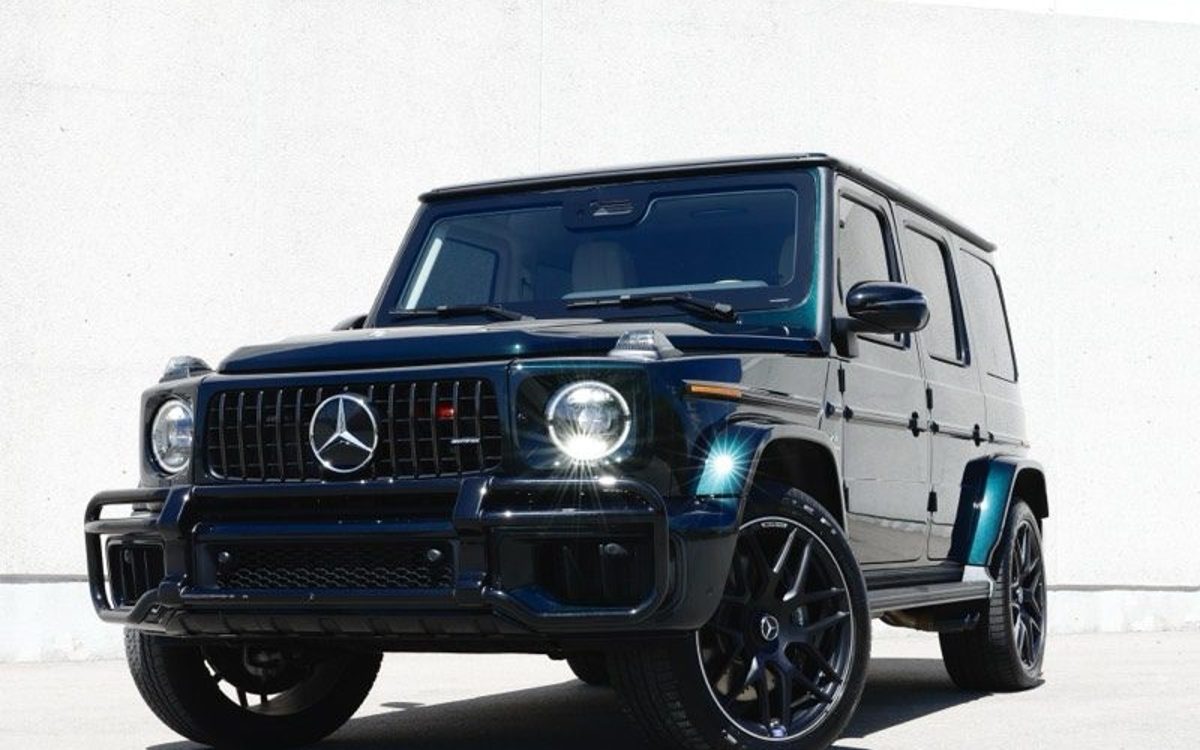
Every serious armored-vehicle buyer eventually asks the same question: what does all that protection do to the way the vehicle drives? It is the right question. Armor is heavy, and weight changes acceleration, braking, cornering, payload and tire life. The difference between a good armored vehicle and a bad one is almost entirely in how that weight is engineered for.
How much weight, by protection level
Added mass depends on the protection level and the platform:
- BR4 (handgun): roughly 350–600 kg added — 350–500 kg on a sedan, up to 600 kg on an SUV or van.
- BR6 (7.62 NATO rifle): roughly 600–900 kg added. This is where engineering becomes critical.
- BR7 (armor-piercing): roughly 900–1,200 kg added — a significant penalty that demands specialised suspension, brakes and bearings.
To put that in perspective: a BR6 armored SUV carries about the weight of a grand piano plus a second row of passengers, all the time.
What weight does to performance
Acceleration
Most BR6 builds lose 0.5–1.5 seconds in 0–100 km/h time. High-output platforms barely notice — a Ram TRX goes from about 4.0 to 4.5 seconds with full BR6 armor because its supercharged V8 has so much headroom. Lower-powered platforms feel the weight more.
Braking
This is the one people worry about and the one good engineering fully solves. We upgrade rotors, calipers and pads on every build, so a correctly-armored vehicle stops from highway speed in a distance comparable to — sometimes shorter than — the factory unarmored car. An armored vehicle with factory brakes would be genuinely dangerous; we never deliver one.
Handling and ride
Properly re-sprung and re-damped, an armored vehicle retains 90–95% of factory ride compliance. Air-suspension platforms like the Maybach S-Class and Range Rover absorb armor weight especially gracefully. Stability-control software is re-calibrated to the new mass so the vehicle behaves predictably at the limit.
Payload and towing
We re-rate the gross vehicle weight using upgraded springs, shocks, brakes and wheel bearings. Body-on-frame platforms (G-Class, Suburban, Land Cruiser, F-350) preserve payload and towing best — a BR6 F-350 still tows around 6,800 kg. Unibody luxury SUVs lose more towing capacity but retain full passenger and luggage capability.
The real lesson: engineering, not armor
Weight is not the enemy — bad engineering is. The added mass of a BR6 build is entirely manageable when the suspension, brakes, bearings, tires and software are all re-engineered as a system. The failures you hear about — armored vehicles that wallow, overheat brakes or chew through tires — are the result of bolting armor onto an un-modified chassis. Exec Armor re-engineers every system on every build. Talk to a specialist about how your chosen platform handles armor weight.
About Exec Armor. We have manufactured custom armored vehicles in Vaughan, Ontario since 2010 — over 500 vehicles delivered to clients in more than 40 countries. CEN BR4–BR7 ballistic protection, ISO 9001 manufacturing, NIJ III & IV equivalent, independent ballistic validation and a global warranty network. Book a free consultation.